Strong Is Starting to Matter More Than Skinny
The goal moved. Not because of a trend cycle, but because the evidence on what muscle does after 40 became difficult to ignore.
Reviewed by Body, Revised Research Desk against our editorial standards.
Filed under Strength: Muscle, training, and why strong became the goal.
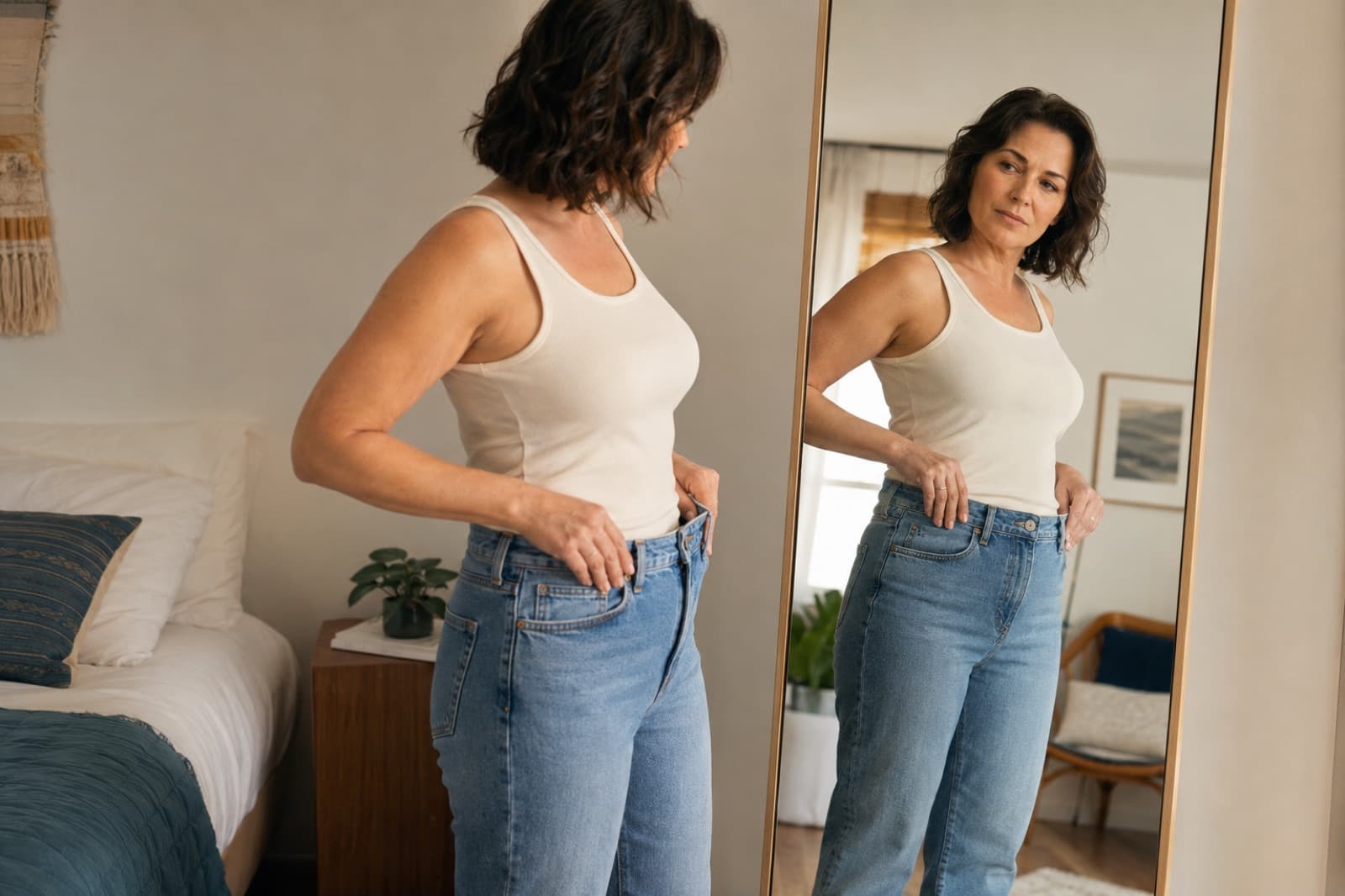
For a long time, the fitness advice aimed at women optimized for one thing: being smaller. Cardio was the method, the scale was the scoreboard, and lifting anything heavy came with a warning about bulk that was never supported by much of anything.
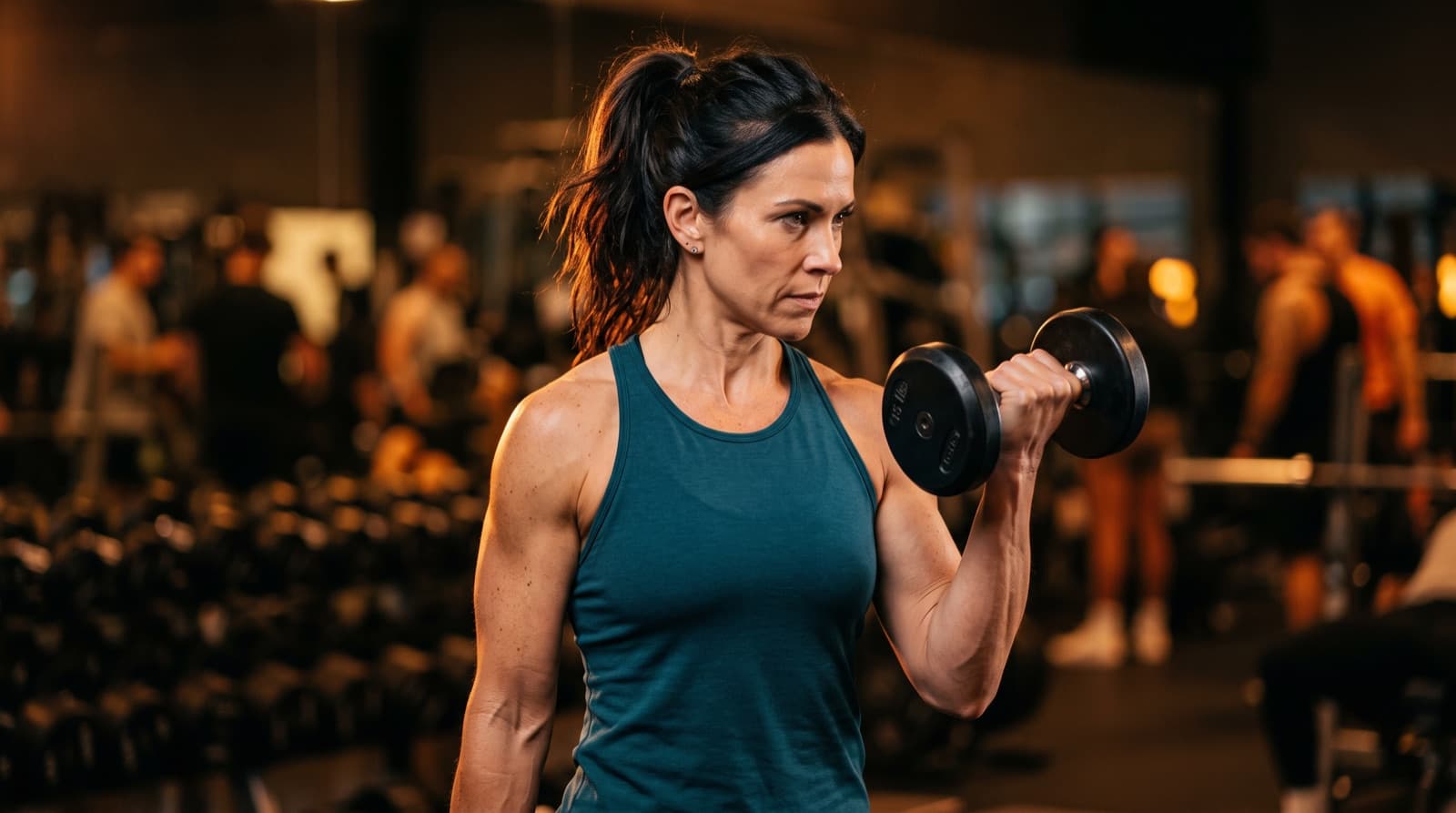
That has changed, and not gently. Muscle is now the thing women over 40 are being told to protect above almost everything else. The reversal is worth understanding, because the reasoning behind it is better than the reasoning behind what it replaced.
What actually changes with age
Adults lose lean mass gradually from roughly the fourth decade onward. For women, the rate steepens around the menopause transition, when declining estrogen removes some of the support for both muscle and bone.
The consequences are not primarily cosmetic. Lean mass relates to strength, balance, fall risk, glucose handling, and the ability to recover from illness or injury. Bone density follows a similar trajectory over a similar window.
Why muscle earns its place
Three reasons come up repeatedly, and they hold up:
It is where glucose goes. Skeletal muscle is a primary site of glucose uptake. More trained muscle mass generally means better capacity to handle a given carbohydrate load.
It is functional insurance. Strength and balance in your forties and fifties are the inputs to independence in your seventies and eighties. This is the least glamorous argument and the most consequential one.
It responds to training at any age. Untrained adults, including in their sixties and beyond, show meaningful strength gains from resistance training. The window does not close.
Muscle stopped being about how you look in a photograph and started being about what you can still do in thirty years.
The bulk question, briefly
The concern that lifting will make women large is not supported by how muscle growth works. Building substantial muscle mass is slow, deliberate, and difficult — it requires sustained training, a caloric surplus, and years of consistency.
What two or three weekly sessions produce is strength, better body composition, and greater bone loading. Not size that arrives by accident.
What starting looks like
The most common failure mode is not doing too little. It is designing an ambitious program, following it for three weeks, and stopping.
Frequency
Two full-body sessions a week is the point at which returns become meaningful. The difference between zero and two is enormous. The difference between two and four is real but much smaller — and only accessible if you sustain it.
Movements
You do not need many. Compound movements cover most of the useful ground:
- A squat pattern — goblet squat, leg press, or box squat
- A hinge pattern — Romanian deadlift, hip thrust, or trap-bar deadlift
- An upper-body push — dumbbell press or push-up variation
- An upper-body pull — row or assisted pull-up
- A carry or core movement — farmer's carry or suitcase carry
Progression
The mechanism is progressive overload: gradually asking your body to do more than it did last time. More weight, more repetitions, or better control. Something should move up over a period of weeks.
Protein
Training is the signal; protein is the material. But more is not automatically better, and the exact target is less settled than social media makes it sound. Our new evidence update, Do Women Need More Protein After Menopause?, looks at a September 2026 meta-analysis alongside randomized trials in postmenopausal women.
The realistic timeline
Neurological adaptations come first — you get stronger before you look different, often within two to four weeks. Visible composition change takes longer, typically three to six months of consistency.
This ordering frustrates people who expected the reverse. It is also why strength benchmarks make a better scoreboard than the mirror: they move sooner and they measure the thing you are actually training.
If weight loss is also part of the picture, I Lost the Weight. Then I Realized Losing Weight Wasn't the Whole Problem covers why composition matters more than the total. And if training is leaving you flattened rather than energized, that is a recovery question — see Why Recovery Feels Different After 40.
References
- 1.Age-related changes in lean mass and the effect of the menopause transition. Body, Revised research desk summary, 2025.
- 2.Resistance training outcomes in previously untrained older adults. Body, Revised research desk summary, 2025.
- 3.Skeletal muscle as a site of glucose disposal. Body, Revised research desk summary, 2025.
- 4.Protein intake and lean-mass preservation during energy restriction. Body, Revised research desk summary, 2025.